72 hr
3-Day Ghorepani Poon Hill Sunrise Trek from Pokhara
Watch dawn break over the Annapurna and Dhaulagiri ranges on this unforgettable Himalayan adventure
Reserve
Hand-picked by our editors — only the best 5 treks from 27 reviewed.
Verified partners for every tour, free cancellation where available, and instant confirmation on every booking.
72 hr
Watch dawn break over the Annapurna and Dhaulagiri ranges on this unforgettable Himalayan adventure
Reserve
72 hr
Experience sunrise over Annapurna and Dhaulagiri on this compact Himalayan adventure through rhododendron forests
Reserve
72 hr
Conquer the Himalayas in three days with sunrise views over Annapurna and Dhaulagiri ranges
ReservePrices from verified partners. Availability updates in real time at checkout. Free cancellation policies apply where shown.
The landmarks, rooms, and views travelers on this tour remember — all visible on a single visit.
A famous, lung-busting climb featuring 3300 stone steps that test every hiker's endurance.
The Poon Hill trek is superior for panoramic sunrise photography, whereas the Mardi Himal route offers a more immersive experience for those seeking closer proximity to alpine peaks. Hikers who prefer manageable terrain often select 3 day poon hill trek itinerary from pokhara tours, while those craving ridge-top solitude gravitate toward the high-altitude Mardi trails.
| Feature | Top pick Poon Hill | Mardi Himal |
|---|---|---|
Primary View Type |
Panoramic sunrise range | Close-up mountain face |
Physical Intensity |
Moderate; beginner-friendly | Challenging; steep sections |
Elevation Max |
3,210 meters | 4,500 meters |
Accommodation Quality |
Standard mountain teahouses | Basic to moderate lodges |
Trail Crowd Density |
High traffic | Moderate to high |
Step count (access) |
3300 | Not applicable |
| See tickets → |
Verdict: Select the 3 day poon hill trek itinerary from pokhara tour if you prioritize accessible viewpoints and cultural village immersion, or choose Mardi Himal if you require a high-altitude challenge with more direct glacier vistas.
Choose your ticket, select your date, and reserve in under two minutes. Secure checkout handled by our verified partner.
Instant confirmation by email, with a mobile voucher you can save offline. No printing, no queuing at a collection desk.
Arrive at the entrance, show your voucher on your phone, and walk in. Most tickets include priority or skip-the-line access.
Practical details for your visit straight from our verified partners — hours, access, rules, and how to get there.
Layered clothing is essential for the 3 day poon hill trek itinerary from pokhara to manage temperature shifts between lowland valleys and the summit. Wear sturdy, broken-in trekking boots to navigate the steep stone stairs.
Keep your permits and passport accessible for the checkpoint officials at Birethanti and Ghorepani. A 25–35 liter daypack is sufficient if you hire a porter for heavier luggage.
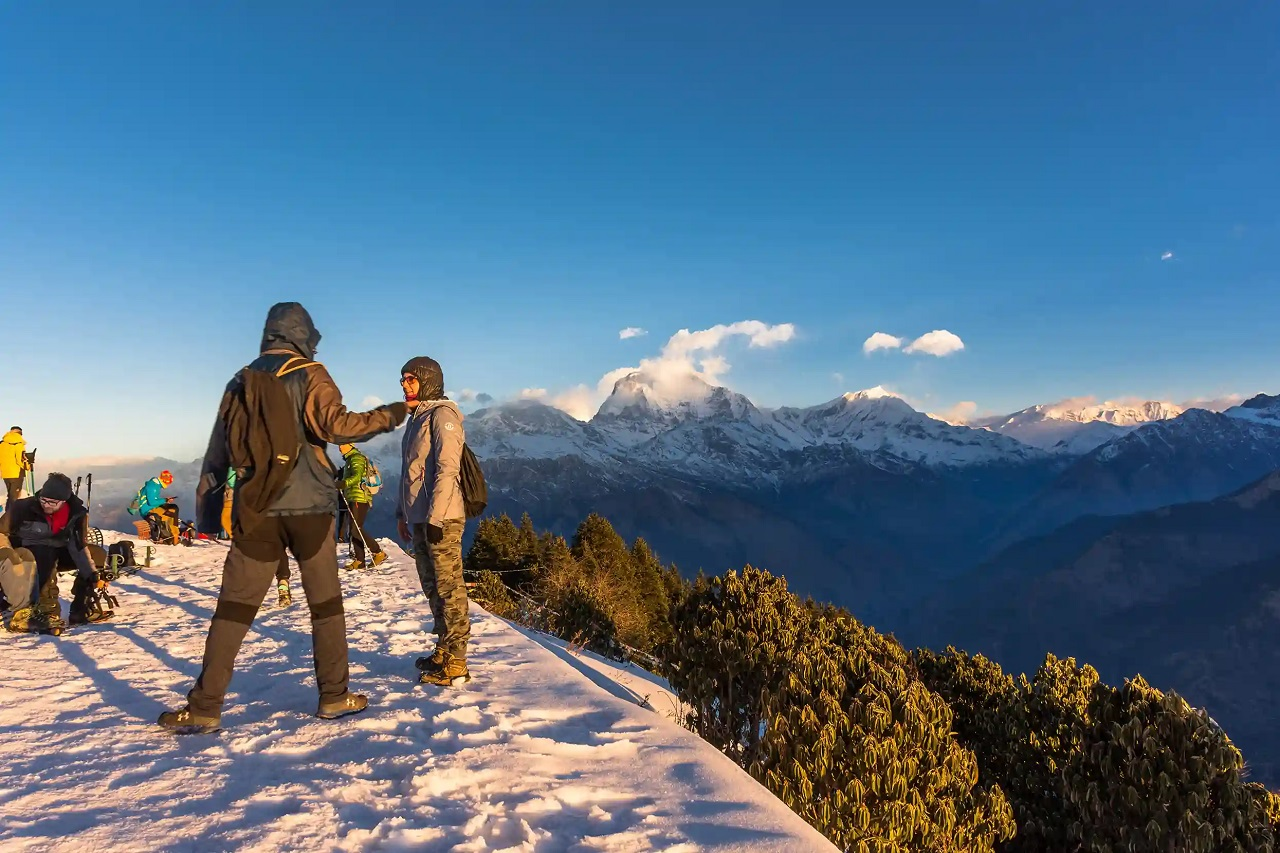
Capture the morning glow on the Dhaulagiri and Annapurna massifs from the 3,210m summit. Bring extra batteries, as cold temperatures drain cameras faster during the pre-dawn climb.
The route involves 3300 steps and significant elevation gain, making it physically demanding. While there is no specialized mobility infrastructure, the trail is well-trodden and managed by local committees.
The 3 day poon hill trek itinerary from pokhara is beginner-friendly for active families, though the steep Ulleri staircase requires stamina. Children under 10 are exempt from the 3,000 NPR entrance fee.
Teahouses along the route provide hearty local meals like Dal Bhat and tea. Always carry water purification tablets, as bottled water options decrease as you ascend.
Best time to go, insider tips, nearby landmarks, and the cancellation fine print — flip through to skim what matters to you.
Flexible, no hidden fees.
Permits are non-refundable once issued by the Nepal Tourism Board. Tour operators typically require 48-hour notice for trek rescheduling.
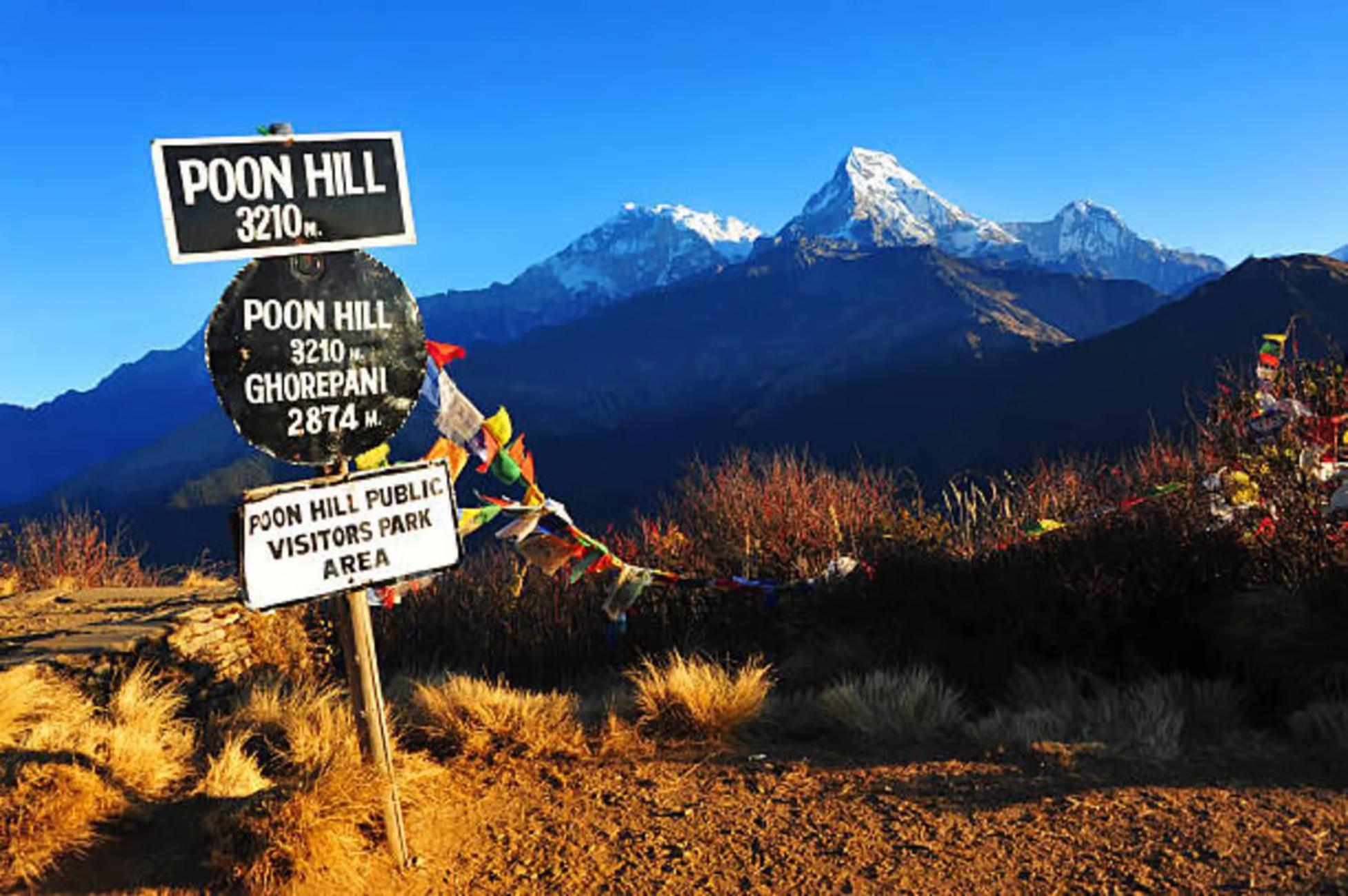
The three-day Ghorepani Poon Hill route compresses the Annapurna Conservation Area's signature panorama into a weekend ascent, rising 1,500 vertical metres from Pokhara's lakeside at 827 metres to Poon Hill's dawn viewpoint at 3,210 metres. Established in 1986 as Nepal's first protected landscape under the King Mahendra Trust for Nature Conservation, the conservation area now shelters 1,226 flowering plant species, including the national flower Rhododendron arboreum, which carpets the forest canopy between Tikhedhunga and Ghorepani each spring. The 3 day poon hill trek itinerary from pokhara follows stone-paved mule tracks built by the Gurung and Magar communities over four centuries of trans-Himalayan salt trade, connecting agricultural terraces at Birethanti with high-altitude pastures at Ghandruk. Poon Hill itself—named for the Pun clan of Magar traders who maintained a seasonal shelter there—offers unobstructed sight lines to Dhaulagiri (8,167 metres), Annapurna South (7,219 metres), Machhapuchhre (6,993 metres), and 27 additional peaks above 6,000 metres, all visible within a 180-degree arc at sunrise. The viewpoint receives 40,000 trekkers annually as of 2026, making it the second-most-visited destination in the Annapurna region after the Annapurna Base Camp trail. Unlike higher-altitude routes that require acclimatisation rest days, the Ghorepani circuit maintains a gradual elevation profile—ascending no more than 600 metres per day—suitable for first-time Himalayan trekkers. Teahouse infrastructure along the route dates to the 1970s when Pokhara's airport opened to domestic flights, transforming subsistence farming villages into trekking hubs. Ghorepani now supports 22 lodges offering dal bhat, Tibetan bread, and plank beds under tin roofs, while Tadapani and Ghandruk provide similar facilities at lower elevations. The Annapurna Conservation Area Project collects a 3,000 NPR entry permit fee, funding trail maintenance, waste management systems that remove 15 tonnes of non-biodegradable refuse annually, and kerosene subsidies that reduce firewood harvesting pressure on old-growth rhododendron stands. Spring (March-May) and autumn (September-November) together account for 78 percent of annual foot traffic, when clear skies and moderate temperatures between 10-20°C create optimal conditions for the 3 day poon hill trek itinerary from pokhara route.

"The conservation area now shelters 1,226 flowering plant species, including the national flower Rhododendron arboreum, which carpets the forest canopy between Tikhedhunga and Ghorepani each spring."
A step-by-step walkthrough of the visit — what you'll see, how long each stage takes, and the details that matter.
You depart Pokhara at dawn in a shared jeep, the one-hour drive to Nayapul tracing the Seti River gorge as terraced rice paddies give way to subtropical forest. At Birethanti checkpoint, you present your Annapurna Conservation Area permit and begin the stone-step climb to Tikhedhunga, crossing suspension bridges over the Modi Khola twice before reaching the village's cluster of lodges by midday. Day one ends at 1,540 metres after 1,400 stone steps and four hours of walking. Day two begins before sunrise. You ascend the famous Ulleri staircase—3,300 uninterrupted stone steps built into the hillside—emerging into rhododendron forest at 2,070 metres. The gradient eases past Banthanti and Nangethanti, where moss-draped oaks filter afternoon light onto the trail. You reach Ghorepani at 2,874 metres by late afternoon, checking into a teahouse with mountain views from the dining hall's plank windows. Sleep comes early; your 04:00 alarm precedes the summit push. You climb Poon Hill's final 336 metres by headlamp, joining 60 other trekkers at the steel observation tower as first light ignites Dhaulagiri's summit pyramid in pink alpenglow. The descent to Tadapani passes through upper rhododendron zone, then drops to Ghandruk's slate-roofed Gurung settlement at 1,940 metres, where you overnight before the final walk to Nayapul and the return drive to Pokhara on day three.
The Annapurna Conservation Area Project (ACAP) entry permit costs 3,000 NPR per person.
Poon Hill is accessible 00:00–23:59 daily, though the prime viewing time is early morning.
The access trail features 3300 steps, particularly along the challenging Ulleri staircase.
Current regulations for the Annapurna region often require a licensed guide; verify your specific tour requirements before departure.
The best arrival window is 04:00–06:00 to ensure you reach the summit before sunrise.
Most agencies in Pokhara offer luggage storage facilities for trekkers starting their 3 day poon hill trek itinerary from pokhara.
Yes, this route is considered one of the most accessible beginner treks in Nepal due to its duration and teahouse infrastructure.
Pack a headlamp, trekking poles, warm layers, a power bank, and a basic first-aid kit.
No, children under the age of 10 do not require an ACAP entrance fee.
No, there are no ATMs along the trail, so ensure you carry enough cash from Pokhara before departing.